Tayxsa
COMMUNITY-BASED CHILDCARE
Problem
We’ve always heard, “it takes a village” yet, modern parents are navigating childcare in isolation.
Dual income households are experiencing unexpected school closures, sick days, cost barriers and limited family support. Parents are experiencing demand at work like they don’t have families and family demands as if they don’t have work. Traditional childcare systems cover predictable needs but families live in the unpredictable gaps.
Meanwhile, we’re more digitally connected than ever yet less embedded in our local communities.
Opportunity
Could technology rebuild hyperlocal trust networks? Not to replace childcare, but to redistribute its burden?
The Vision
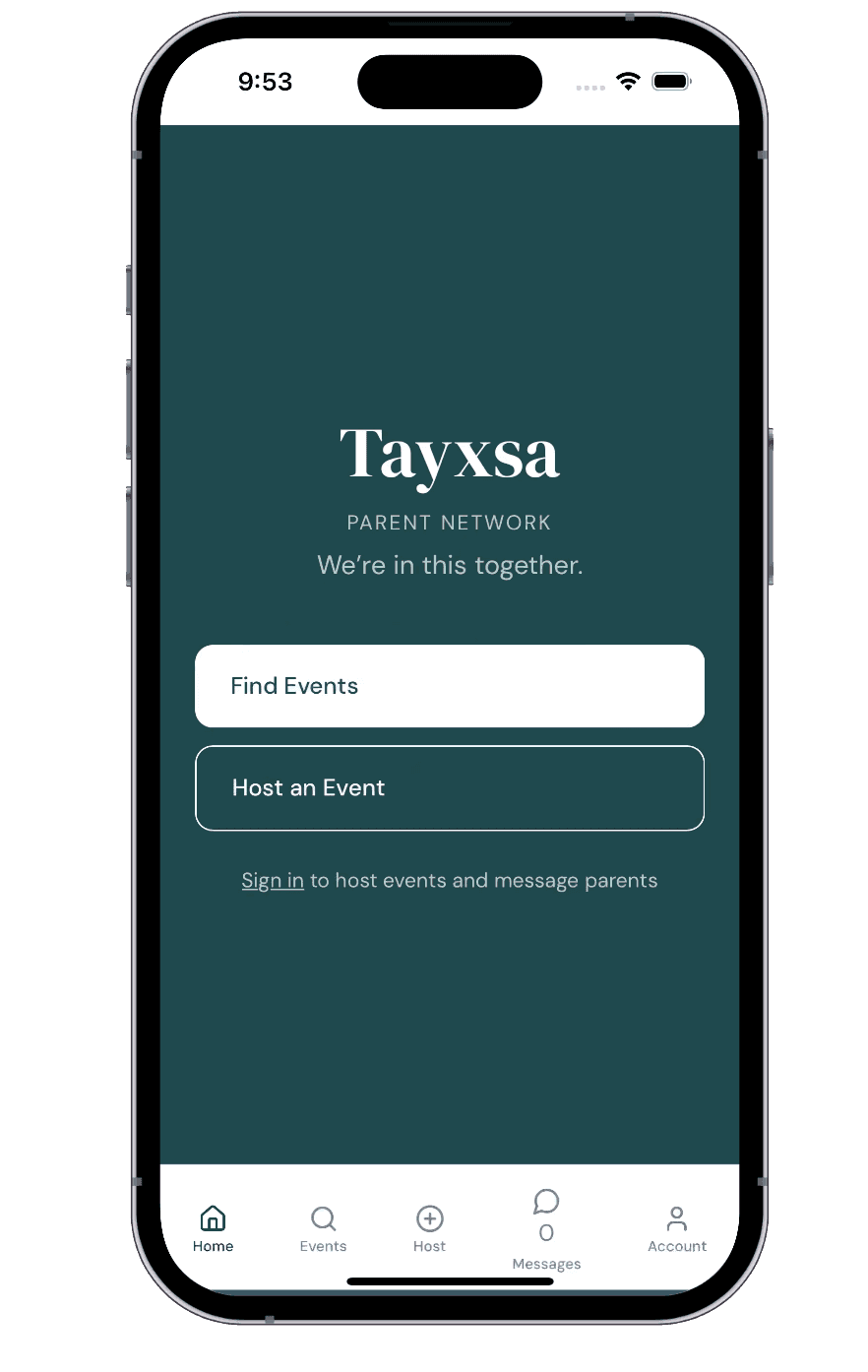
Tayxsa is a community-powered app that enables families to:
Share childcare responsibilities in trusted circles
Discover and host kid-friendly events
Connect around shared values, interests, and needs
Instead of defaulting to transactional, for-profit solutions, Tayxsa helps parents build mutual support systems rooted in reciprocity and trust.
Role and approach
I designed and built Tayxsa end-to-end using Lovable and Notion from product strategy through interaction design, systems modeling, and beta launch.
This project required:
Defining the product vision and value exchange
Mapping trust and safety systems
Designing multi-sided user flows (hosts + parents)
Creating the information architecture
Designing onboarding and behavioral guidance
Shipping a working beta
Strategy
Tayxsa functions as a two-sided trust marketplace, with unique constraints:
Events involve children
Trust must be earned, not assumed
Parents are time-poor and cognitively overloaded
The core design challenge was balancing:
Ease of use
Safety transparency
Social friction reduction
Clear reciprocity norms
Key User Journeys
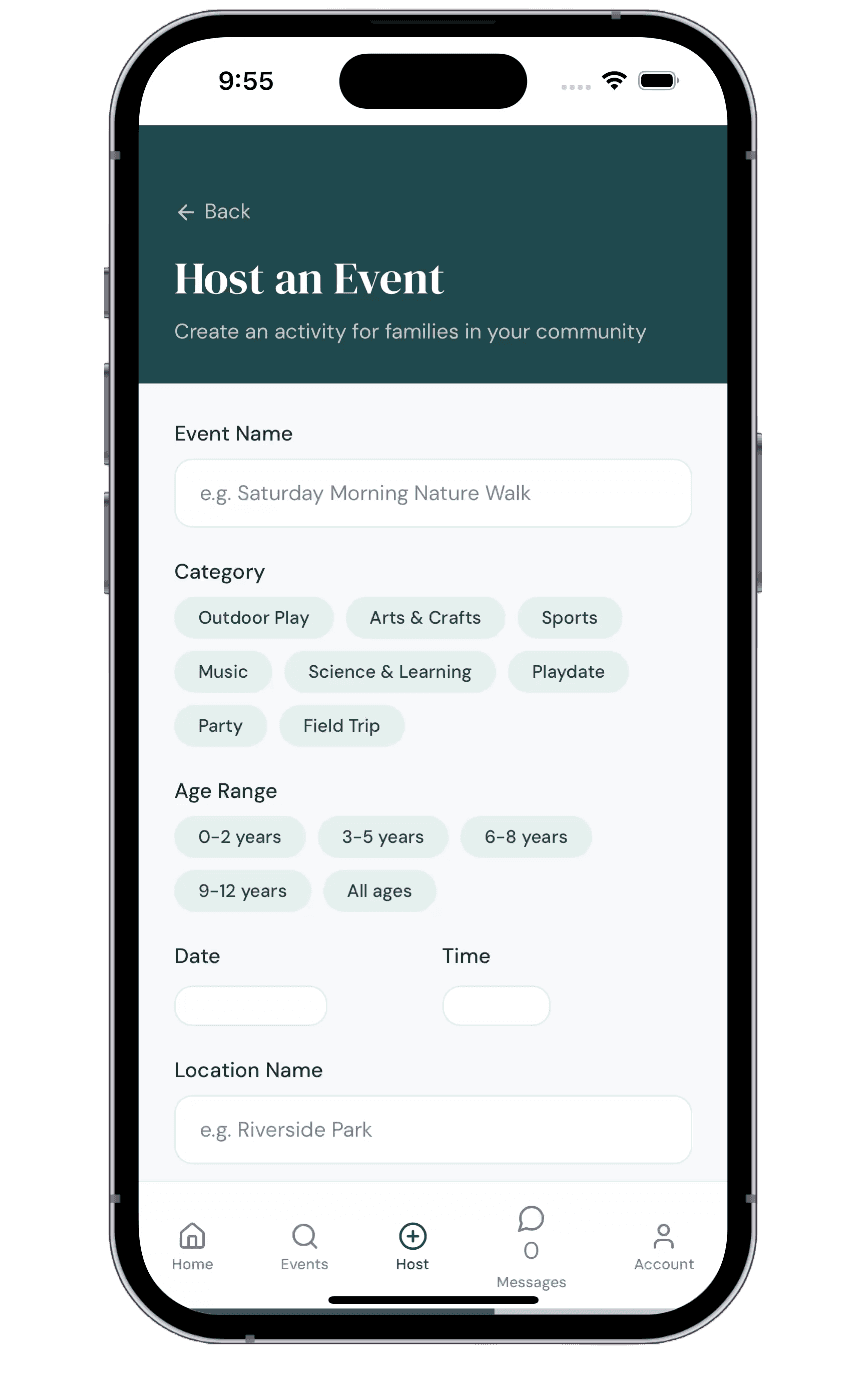
Hosting an Event
Designed to reduce friction while maintaining safety controls.
Parents can:
Define event type, date, time, and location
Set capacity limits
Specify age ranges and interests
Add accommodations (allergies, neurodivergence, etc.)
Configure privacy (invite-only, approval required, visibility level)
Design decision:
Make safety configuration part of the creation flow to normalize intentional hosting.
Profile & Family Management
Parents manage:
Child profiles (DOB, allergies, accommodations)
Interest mapping to event categories
Event history (hosted and attended)
Contact and social links
Design decision:
Profiles are structured to make compatibility visible without oversharing sensitive data.
Finding and Booking Events
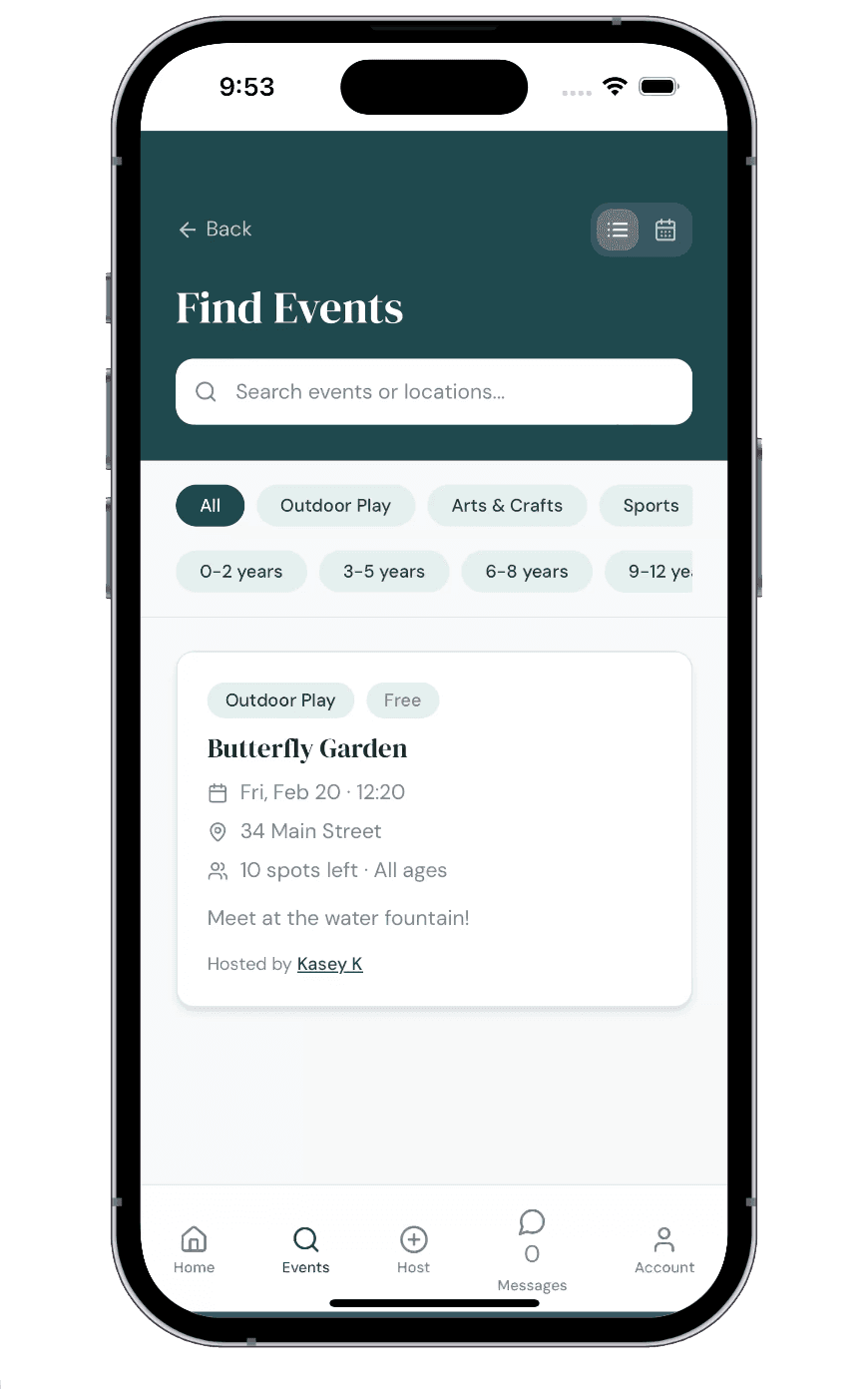
Busy parents need clarity fast.
Users can:
Filter by child’s age and interests
Browse by date range and proximity
Review host profiles and mutual connections
See safety parameters before requesting
Request attendance and receive confirmation
Design decision:
Surface trust signals early (mutuals, profile completeness, history of hosted events) to reduce cognitive load during booking.
Onboarding
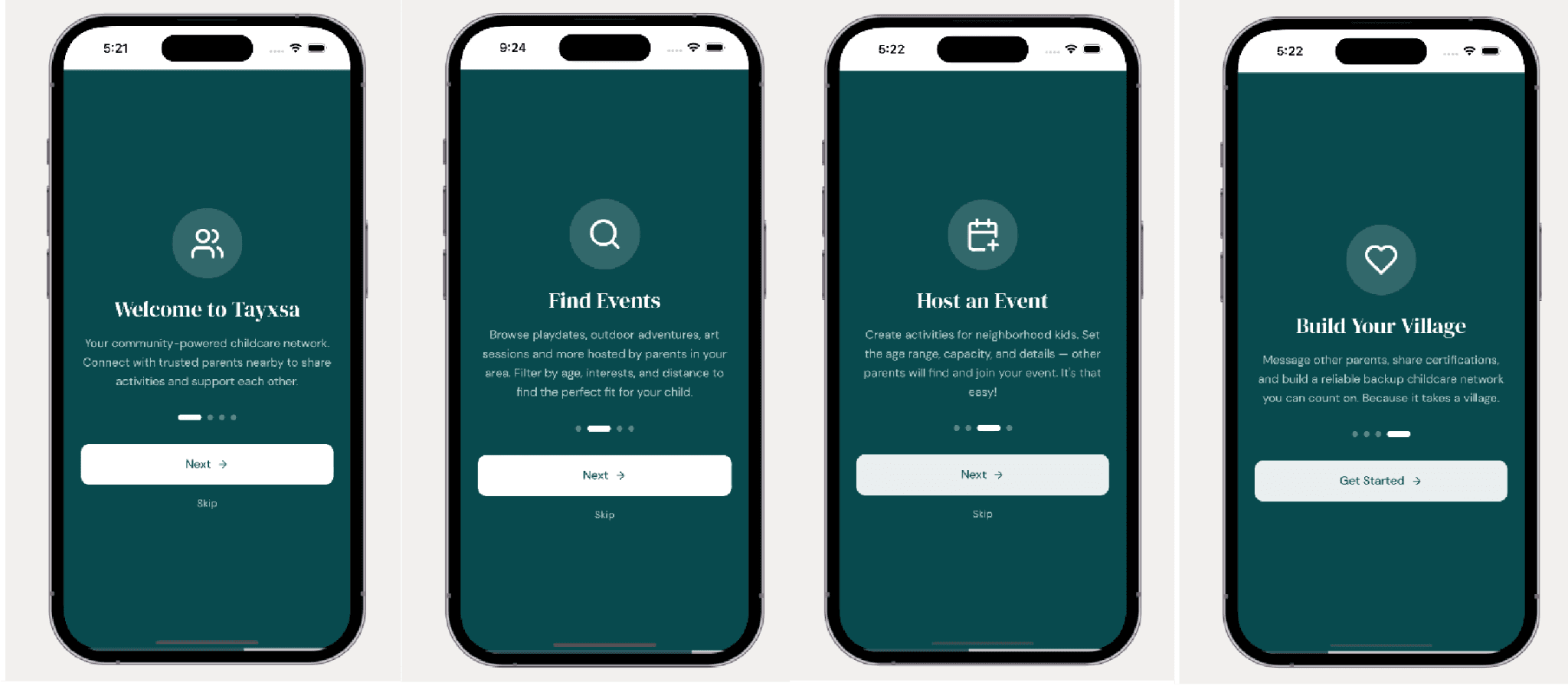
Tayxsa introduces:
The community reciprocity model
How to host and how to attend
Safety expectations and norms
Playful iconography and guided flows were designed to make onboarding feel welcoming — not procedural.
Beta Learnings (Early Insights)
Initial findings:
Security and ratings were paramount
Trust indicators strongly influence booking behavior
Calendar integration is critical for adoption
Hosting requires emotional reassurance, not just UI clarity
Beta Testing & Iteration
Tayxsa launched to a closed beta of 15 parents to validate trust signals, usability, and real-world hosting behavior.
Through moderated feedback sessions and in-app observation, several friction points emerged particularly around trust transparency, scheduling reliability, and social proof.
“I think it’s a great idea, I would definitely use it to find events locally”
-Audrey, Mom of 3
“I love the idea, I wish it had existed when my middles were little.”
-Robyn, Mom of 4
Key Improvements Shipped Post-Testing
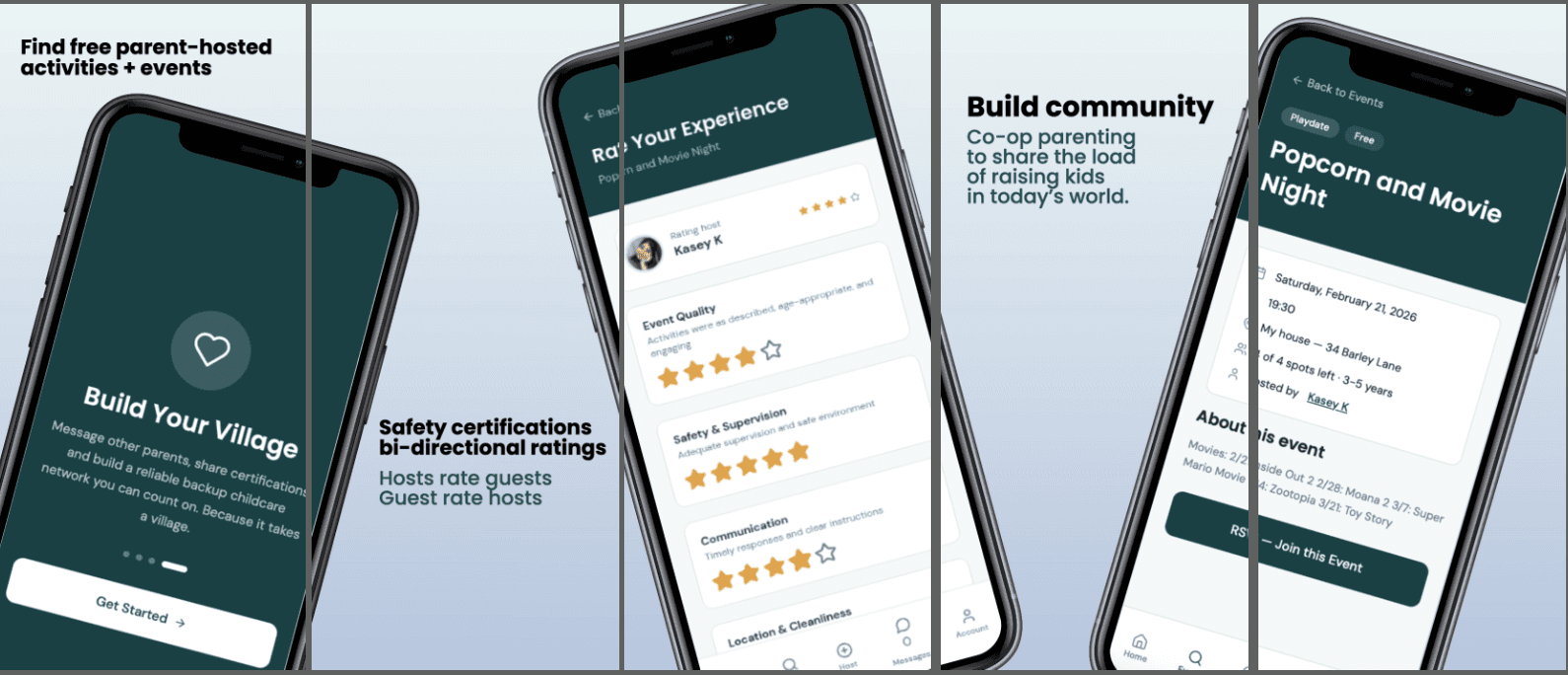
Bi-Directional Rating System
Insight:
Parents wanted stronger trust signals before committing to events involving their children.
Solution:
I implemented a post-event, bi-directional rating system:
Hosts rate guests
Guests rate hosts
Ratings surface on user profiles
This introduced accountability on both sides of the marketplace and reinforced community norms.
Impact:
Increased perceived safety and confidence in booking decisions.
Calendar System Upgrades
Insight:
Parents rely heavily on external calendars. Manual event entry created friction and risk of missed commitments.
Solution:
Direct integration with major calendar providers
Manual date entry (instead of picker-only input)
Recurring event support
Recurrence detail customization
Impact:
Reduced scheduling errors and aligned the product with real parent workflows.
Social Visibility via Guest Lists
Insight:
Trust increases when parents see familiar names attached to events.
Solution:
Searchable friend connections
Visibility into events friends are attending
View hosted events by specific users
This strengthened the “community fabric” layer of the product.
Impact:
Improved social proof and reduced booking hesitation.
Enhanced Filtering & Accessibility Awareness
Insight:
Parents of children with special accommodations needed more precise filtering.
Solution:
Filter by special accommodations
Toggle between free and paid events
This made the platform more inclusive and transparent.
Impact:
Improved discoverability and reduced browsing fatigue.
Future Work
Tayxsa is not just a scheduling app.
It is a behavioral design experiment in:
Rebuilding local trust networks
Designing reciprocity systems
Supporting overstretched caregivers
Using technology to reduce (not increase) social isolation
Want to discover the app for yourself?
1. Hosting an Event
Designed to reduce friction while maintaining safety controls.
Parents can:
Define event type, date, time, and location
Set capacity limits
Specify age ranges and interests
Add accommodations (allergies, neurodivergence, etc.)
Configure privacy (invite-only, approval required, visibility level)
Design decision:
Make safety configuration part of the creation flow to normalize intentional hosting.